
R&D capabilities, protocol expertise, and sensor calibration technology that define the precision standard in HVAC controls.
Documented engineering capabilities across four technology disciplines
Our PID and fuzzy-logic control algorithms are calibrated against real-world HVAC load profiles — not idealized test bench conditions. Each controller firmware undergoes 2,000+ hours of accelerated life testing under variable ambient conditions from -40C to +65C before release.
Native implementation of BACnet IP, BACnet MS/TP, Modbus RTU, Modbus TCP, and LonWorks protocols. Our gateway modules achieve 99.7% uptime in multi-vendor BMS environments based on field data from 3,400+ installations across North America and Europe.
NIST-traceable calibration processes for every pressure transmitter and temperature probe. Pt1000 probes are individually characterized across the full -50C to +150C range, with deviation certificates shipped with each unit. Pressure transmitters achieve 0.25% FS accuracy with long-term stability verified over 10,000+ thermal cycles.
Electronic expansion valves engineered specifically for R-290 (propane) and R-744 (CO2) systems, with explosion-proof coil options and transcritical CO2 pressure ratings up to 130 bar. Stepper motor actuation provides 0.1K superheat control accuracy — critical for maintaining COP in variable-load natural refrigerant systems.
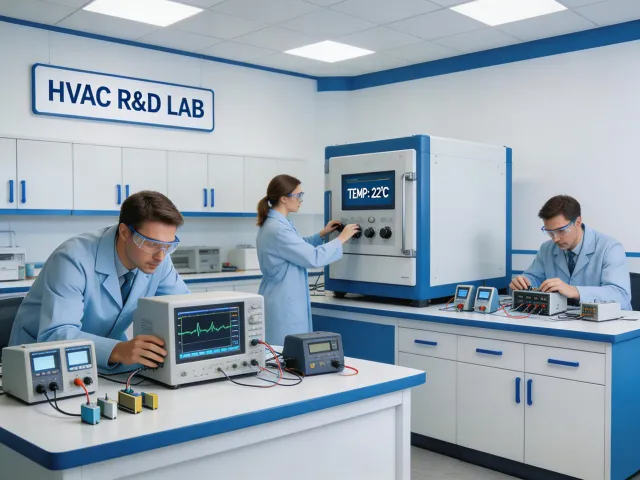
72 dedicated R&D engineers across 3 facilities operate specialized test environments including:
Key performance metrics verified through AHRI-certified testing protocols
| Product Category | Key Metric | Honeywell Specification | Test Standard |
|---|---|---|---|
| Electronic Expansion Valves | Superheat Control Accuracy | 0.1 K | EN 12900 / ASHRAE 23 |
| Pressure Transmitters | Full Scale Accuracy | 0.25% FS | IEC 60770 |
| Temperature Probes (Pt1000) | Operating Range | -50C to +150C | IEC 60751 Class A |
| BMS Gateway Modules | Protocol Uptime | 99.7% | Field data (3,400+ sites) |
| VFD Controllers | Power Range | 0.75 - 75 kW | IEC 61800-2 |
| Solenoid Valves | Max Working Pressure | 45 bar | PED 2014/68/EU |
Documented constraints for correct component specification
| Component | Limitation | Engineering Note |
|---|---|---|
| Electronic Expansion Valves | Maximum working pressure: 130 bar (R-744 transcritical). Above 130 bar, external pressure relief is mandatory per ISO 5149. | CO2 booster systems exceeding 130 bar suction-side pressure require an upstream pressure-limiting valve not supplied by Honeywell. |
| Pressure Transmitters | 0.25% FS accuracy applies at 20-25C ambient. Accuracy degrades to 0.5% FS at temperature extremes (-40C or +85C). | For applications requiring 0.25% FS across full temperature range, specify the HW-PT-A series with active temperature compensation. |
| BMS Gateway Modules | 99.7% uptime is based on BACnet IP environments. Mixed-protocol installations with legacy LonWorks segments may experience 0.5-1.5% higher packet loss. | Legacy LonWorks-to-BACnet bridging requires firmware version 3.2+ and dedicated subnet isolation. |
| VFD Controllers | Derating applies above 40C ambient and at altitudes above 1,000 m. Maximum output is reduced by 1% per degree above 40C and 1% per 100 m above 1,000 m. | For installations in hot climates or elevated sites (e.g., data centers in Mexico City at 2,200 m), oversizing by 10-15% is recommended. |
| Solenoid Valves (R-717) | Ammonia-compatible (R-717) solenoid valves require ATEX-rated coils in enclosed machine rooms per EN 378 and ASHRAE 15. | Standard coils are not rated for ammonia environments. ATEX coil option must be specified at order. |
Engineering trade-offs that inform control system specification decisions
The Kigali Amendment and EU F-Gas Regulation are accelerating the phase-down of high-GWP HFCs, creating a split in the industry over whether to adopt natural refrigerants (CO2/R-744, ammonia/R-717, propane/R-290) or next-generation synthetic HFOs (R-1234yf, R-1234ze).
Natural refrigerants offer zero or near-zero GWP, proven long-term sustainability, and no patent dependencies. CO2 transcritical systems are increasingly viable even in warmer climates. However, they require specialized safety measures — R-290 is flammable (A3 classification), R-717 is toxic (B2L), and R-744 operates at pressures exceeding 100 bar, demanding higher-rated components.
Synthetic HFOs provide drop-in compatibility with existing infrastructure and a lower upfront retrofit cost. They avoid flammability and toxicity concerns and can leverage the existing technician workforce without retraining. The trade-off is higher refrigerant cost per kilogram and ongoing debate about PFAS environmental persistence.
Honeywell EEVs and solenoid valves are engineered for both pathways — R-290/R-744 rated components and HFO-compatible seals are available across the product line.
Inverter-driven compressors offer modulating capacity but at higher capital cost. The breakeven point depends heavily on load profile, energy prices, and application type.
Variable speed drives deliver 30-50% energy savings at part load, enable precise temperature control (critical for data centers and pharmaceutical environments), and reduce mechanical stress through soft-start operation. They are essential for applications with fluctuating cooling demand.
Fixed speed compressors have lower capital cost, simpler controls, easier maintenance, and proven reliability in constant-load applications such as industrial process cooling and ice making where the compressor runs near full capacity continuously.
Our VFD controllers (0.75-75 kW) support both modes. For applications below 60% average load factor, inverter drives typically achieve payback within 18-30 months at current energy rates in North America and Europe.
Access datasheets, wiring diagrams, protocol guides, and selection tools for every Honeywell control component.
Request Full Product Documentation